
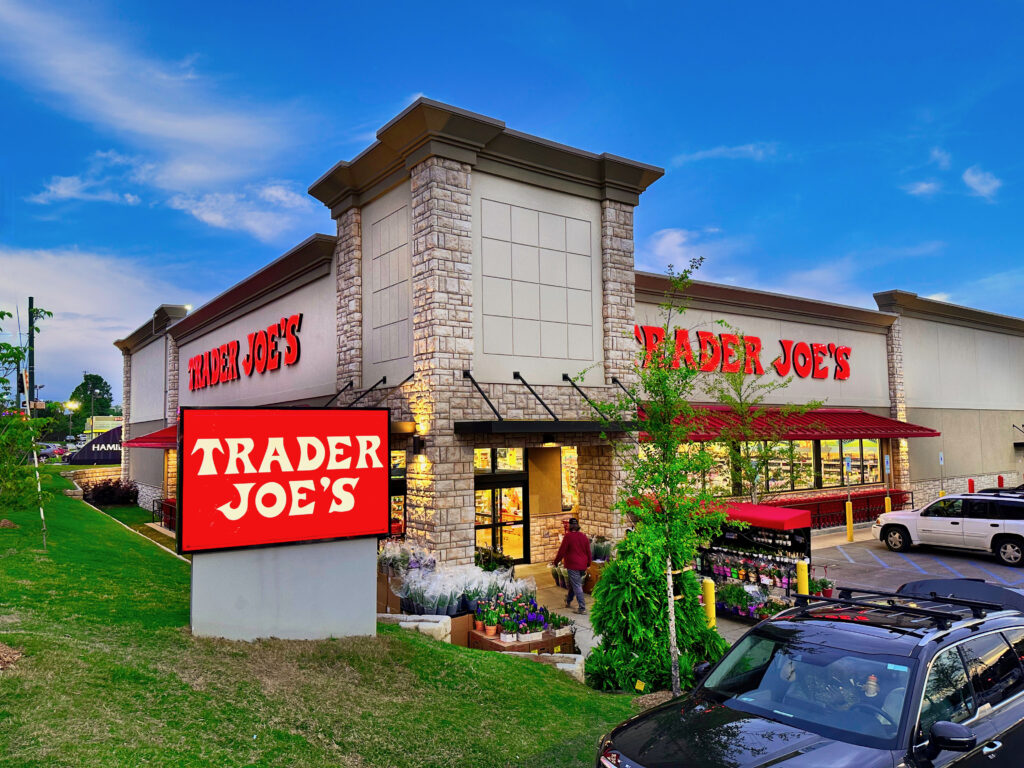
Customer loyalty has become one of the biggest challenges in the grocery retail industry. Supermarkets are investing heavily in loyalty programs, personalized discounts, mobile apps, and digital marketing to encourage repeat purchases. However, Trader Joe’s continues to rank among America’s highest-rated grocery chains without relying on these conventional retail strategies. The retailer earned a score of 86 in the 2026 American Customer Satisfaction Index (ACSI), placing it at the top of the U.S. supermarket category.
Operating more than 630 stores across the United States, Trader Joe’s has built one of retail’s most loyal customer bases by focusing on trust, consistency, and a distinctive customer experience rather than expensive marketing campaigns. Its business model demonstrates that lasting customer loyalty can be built through carefully curated products, dependable quality, and memorable in-store experiences instead of reward points or constant promotions.
Many retailers focus on bringing customers back after they leave the store. Trader Joe’s focuses on giving them a reason to come back before they even walk out. Every interaction inside the store, from product discovery to conversations with Crew Members, contributes to that experience. That simple difference has helped the company build lasting customer relationships in one of the world’s most competitive retail markets.
Curated Retail Strategy
A conventional supermarket typically carries between 30,000 and 50,000 products. Trader Joe’s offers roughly 4,000 carefully selected items, with nearly 80% of its assortment sold under private-label brands. Offering fewer products may appear limiting, yet it solves a problem many shoppers experience every day: too many choices.
Consumer behavior research has long shown that excessive choice can make purchasing decisions more difficult. Trader Joe’s applies the opposite approach by curating its shelves instead of expanding them. Shoppers spend less time comparing similar products and more time making confident purchasing decisions. Over time, that confidence becomes associated with the retailer itself rather than individual brands.
Its private-label strategy strengthens this advantage. Since many signature products are available only at Trader Joe’s, shoppers visit specifically for those exclusive items instead of comparing identical products across multiple retailers. This creates a shopping experience built around discovery rather than price comparison. More importantly, it gives the company greater control over product quality, pricing, and brand identity.
Memorable Shopping Experience
One of the biggest reasons behind Trader Joe’s success is what it deliberately leaves out. There are no loyalty cards, membership tiers, or constant promotional emails competing for shoppers’ attention. Instead, the retailer invests in creating an enjoyable in-store experience that encourages people to return naturally.
Employees, known as Crew Members, are encouraged to interact with shoppers, recommend products, and answer questions based on firsthand product knowledge. Managers, called Captains, help maintain a store culture that feels welcoming and approachable. Handwritten product signs, seasonal displays, and the company’s long-running Fearless Flyer publication reinforce a personality that feels different from a conventional supermarket.
Limited-time and seasonal products further strengthen customer engagement. Every visit offers an opportunity to discover something new, giving shoppers a practical reason to return more frequently. Businesses often invest heavily in attracting new customers, yet Trader Joe’s demonstrates that giving existing customers a consistently enjoyable experience can be equally valuable.
The Power of Simplicity
Retailers often compete by adding more features, more products, and more technology. Trader Joe’s has remained disciplined by focusing on simplicity wherever possible. That philosophy extends across product selection, pricing, store layout, and customer interactions.
Its limited assortment also helps maintain consistent quality standards. Every product occupies valuable shelf space, meaning each item must earn its place. Shoppers gradually develop confidence that products carrying the Trader Joe’s name meet a dependable standard, making them more willing to try unfamiliar items without hesitation.
Word-of-mouth continues to be one of the company’s strongest marketing advantages. Customers regularly recommend products to friends, family members, and online communities because their experiences feel genuine. That kind of recommendation carries a level of credibility that paid advertising often struggles to achieve. Consistency, rather than constant promotion, quietly becomes part of the brand’s identity.
Conclusion
Trader Joe’s built one of retail’s most loyal customer bases by staying committed to a simple idea: make every shopping trip worth repeating. Instead of relying on complicated reward systems or aggressive promotions, the company invested in product quality, thoughtful curation, knowledgeable employees, and a customer experience that encourages people to return because they want to, not because they are rewarded for it.
Its success also offers an important reminder for businesses beyond grocery retail. Long-term customer loyalty is rarely created through incentives alone. It grows when a company consistently delivers value, removes unnecessary complexity, and earns customer confidence through everyday decisions. Trader Joe’s proves that customer loyalty is built through consistent everyday experiences, not occasional marketing campaigns.
Frequently Asked Questions
1. Why is Trader Joe’s so popular despite not having a loyalty program?
Trader Joe’s focuses on consistent product quality, exclusive private-label items, and an enjoyable in-store experience. These factors encourage customers to return without relying on reward points or discounts.
2. What makes Trader Joe’s business model different from other supermarkets?
Unlike most grocery retailers, Trader Joe’s offers a carefully curated selection of around 4,000 products, most of which are private-label, making shopping simpler and more distinctive.
3. Why does Trader Joe’s sell mostly private-label products?
Private-label products allow Trader Joe’s to maintain quality standards, offer competitive prices, and provide exclusive items that customers cannot easily find at competing retailers.
4. How does Trader Joe’s build strong customer loyalty?
The company earns customer loyalty through trusted product selection, knowledgeable employees, and a shopping experience that feels personal, consistent, and enjoyable rather than through promotional rewards.
5. What can other businesses learn from Trader Joe’s success?
Trader Joe’s shows that long-term customer relationships are built through consistency, trust, and delivering value in every interaction instead of depending solely on marketing campaigns or loyalty programs.