
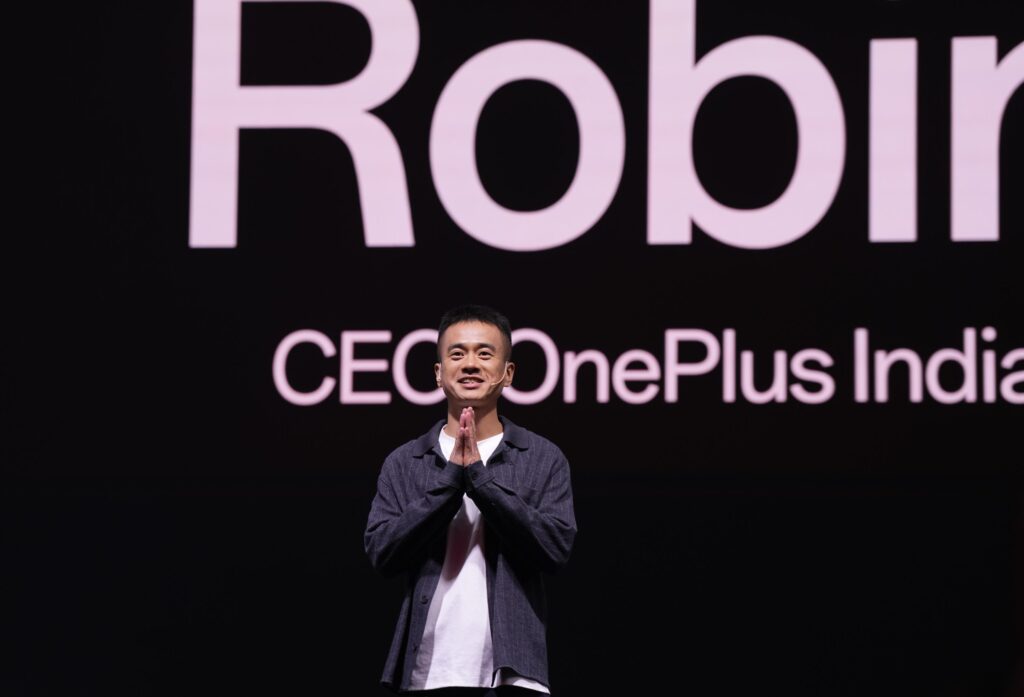
OnePlus India CEO Robin Liu has resigned from his position, marking one of the biggest leadership changes for the company in recent years. His exit comes at a time when OnePlus is dealing with declining shipments, falling market share, restructuring within parent company OPPO, and growing concerns around its global business operations.
The company confirmed that Liu will officially leave on March 31, 2026. OnePlus said he is stepping down to pursue “personal passions” and thanked him for his contributions to the brand in India.
Robin Liu joined OnePlus in 2018 and played an important role in expanding the company’s presence in India. During his time with the brand, OnePlus strengthened its retail network, expanded into products beyond smartphones, and managed several market challenges, including retailer disputes and rising competition in the premium smartphone segment.
OnePlus Leadership Faces Major Shift
Liu’s resignation is not being seen as a normal leadership exit.
OPPO Group, which owns OnePlus, Realme, and other smartphone brands, is restructuring operations to reduce costs and improve efficiency. Teams across multiple brands are being merged under a more centralized leadership structure.
Leadership across OnePlus is increasingly being aligned under Sky Li, who now oversees a broader group of OPPO-owned brands. Robin Liu was expected to work under this new structure, which may have contributed to his decision to leave.
OnePlus has not officially announced a replacement for Liu so far.
OnePlus Faces Falling Market Share
The leadership change comes at a difficult time for the company in India.
Research from International Data Corporation and CyberMedia Research shows that OnePlus recorded one of the sharpest shipment declines among major smartphone brands in 2025. IDC estimated a 38.8 percent year-on-year drop in shipments, while CMR placed the decline at around 32 percent.
The company’s market share in India also dropped from around 3.9 percent in 2024 to nearly 2.4 percent in 2025.
OnePlus has been facing stronger competition from Samsung, Apple, Vivo, and Xiaomi, especially in the premium smartphone market. While the Nord series helped OnePlus reach more mid-range customers, many analysts believe it also weakened the brand’s premium image.
OnePlus Shifts Back to Online Sales
Another major challenge for OnePlus has been its retail business.
OnePlus is shifting back toward an online-first strategy in India to reduce costs and protect margins. Some partner-run OnePlus stores may close as the company focuses more heavily on direct online sales.
OnePlus is expanding its service network across India. The company recently announced plans to increase its authorized service centers from 400 to more than 600 by using OPPO’s support infrastructure.
This move is aimed at improving after-sales service in both major cities and smaller markets.
OnePlus Denies Shutdown Reports
Robin Liu’s resignation has also increased discussion around reports that OnePlus could reduce operations in some global markets.
OnePlus denied rumours that it was planning to shut down in India or other major regions. The company has repeated that its India business will continue normally and that customers will continue receiving software updates, warranty support, and new product launches.
However, Liu’s exit has added more attention to the challenges the company is currently facing.
Impact on OnePlus and the Smartphone Industry
Robin Liu’s resignation adds more pressure on OnePlus at a time when the company is already trying to stabilize its position in India.
The leadership change could create short-term uncertainty inside the company, especially because OnePlus has not announced a successor yet. Key areas such as sales, retail partnerships, marketing strategy, and product positioning could face disruption during this transition period.
The resignation also comes during a larger restructuring inside OPPO Group, which means OnePlus may lose some of its independent decision-making power in India. With teams across OnePlus, OPPO, and Realme increasingly being combined, the company may shift toward a more centralized business model.
For the smartphone industry, this is another sign that brands are facing stronger pressure to cut costs, simplify operations, and focus more on profitability instead of only chasing market share.
Competition in India’s premium smartphone segment is also expected to become even stronger. Brands like Samsung, Apple, Vivo, and Xiaomi may benefit if OnePlus struggles to maintain its position during this leadership transition.
OnePlus remains an important player in India’s mid-range smartphone market, especially through its Nord series. That means the company’s next leadership decisions will have a direct impact on how it competes in one of the world’s largest smartphone markets.