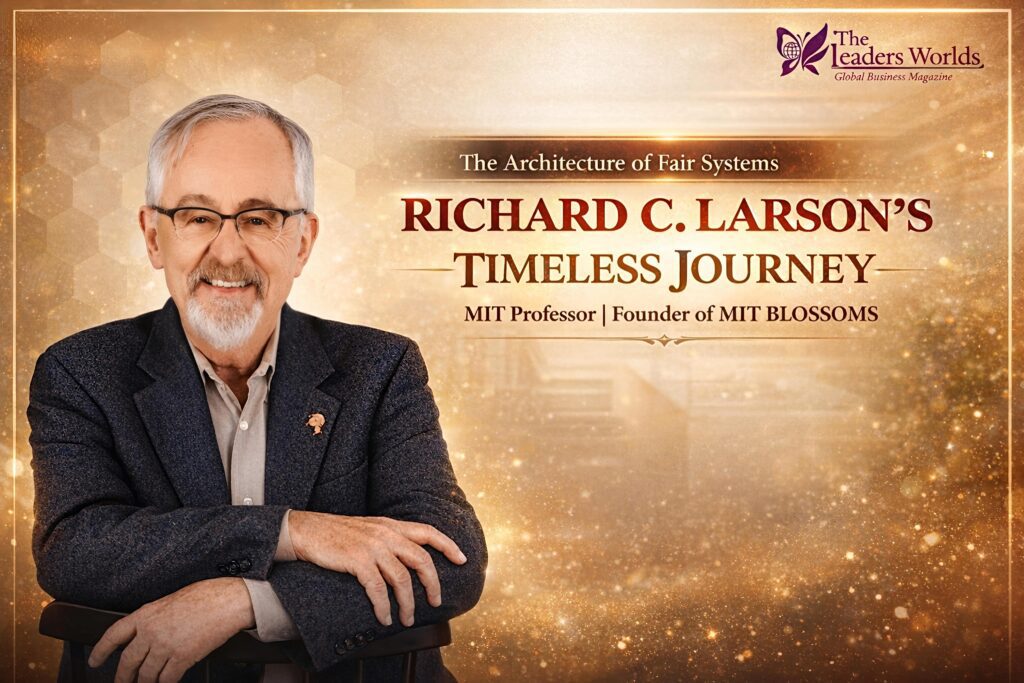
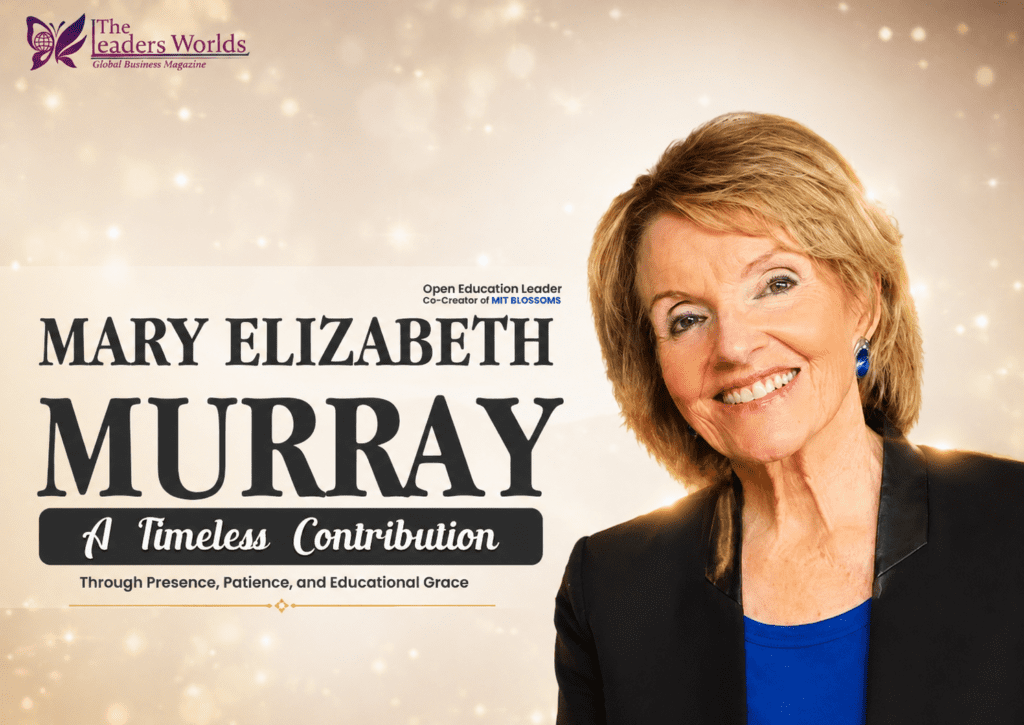
Some of the most important changes in the world do not begin in boardrooms or policy papers. They begin quietly, inside a shared life, where two people learn how to listen to the same questions and care about the same future. The story of Mary Elizabeth Murray, known as Liz, and her husband Richard C. Larson belongs in that category.
For more than four decades, Liz and Richard built their life together as true partners. Their marriage shaped not only their personal world but also the direction of the work they would eventually carry into classrooms across many parts of the world.
A Life Built on Partnership
Liz and Richard’s relationship was grounded in steady attention to one another. They listened carefully, challenged each other’s thinking, and learned how to carry responsibility together. Their bond was not built on performance or display, but on consistency and mutual respect.
Those who worked alongside them often noticed how naturally their personal and professional lives blended. Conversations about life, education, and purpose flowed easily between them, creating a foundation that allowed ideas to grow slowly and meaningfully.
When Love Turned Toward Education
Over time, education became the heart of their shared concerns. They spoke often about opportunity, access, and the uneven way knowledge reached different communities. Liz felt these questions deeply and helped keep their focus on the people behind every policy and system.
Through these conversations, their commitment to education moved beyond academic interest. It became a shared responsibility that guided the choices they made together.
The Beginning of MIT BLOSSOMS
From this sense of responsibility emerged the earliest vision ofMIT BLOSSOMS. The initiative did not appear overnight. It developed through years of conversation, travel, listening, and collaboration with educators across different regions.
While Richard guided the academic structure of BLOSSOMS, Liz helped build the relationships and trust that allowed the project to grow. Where Richard brought design and planning, Liz brought patience, care, and attention to how learning feels inside real classrooms.
Carrying the Work Forward
Together, they approached schools not as authorities delivering solutions, but as partners working alongside teachers and students. That collaborative spirit became part of BLOSSOMS itself, shaping lessons that pause for discussion, place teachers at the center, and invite students into the process of thinking.
When Liz passed away, the work they had built together did not lose its meaning. It gained new depth. The values that shaped their life, respect, patience, and belief in human potential, continue to guide the initiative they created.
What Their Journey Leaves Behind
What endures most strongly in their story is not a program or an institution, but the example they left behind: a life where love became responsibility, and responsibility became action.
Their journey reminds us that transformational change does not begin with ambition alone. It begins when two people choose to care deeply, build patiently, and carry something meaningful into the world together.
How Mary Elizabeth Murray Helped Turn Ideas Into Real Classrooms
Many educational initiatives begin with careful planning, long before they meet the realities of everyday classrooms. Whiteboards fill quickly. Frameworks come together. Everyone agrees on what should happen. What often receives less attention is what comes next, when those ideas leave meetings and enter classrooms where time is limited and expectations are already heavy. Mary Elizabeth Murray was drawn to that second stage.
It was the part of the work where success was never guaranteed.
As Richard Larson’s research and teaching began reaching beyond MIT, Mary became increasingly involved in the practical questions surrounding that reach. She was less interested in how a concept sounded and more interested in how it would feel once it reached a real classroom. Would it make sense to a teacher managing a tight schedule? Would it allow space for discussion, rather than quietly pushing students toward quick conclusions?
Paying Attention to the Details That Decide Outcomes
Mary approached education with a strong instinct for human detail. Not technical detail, but the kind that determines whether something works. She noticed when plans assumed ideal conditions that rarely existed. She noticed when materials felt heavy rather than helpful. And she noticed moments of hesitation from educators, not as resistance, but as signs that something needed to change.
Instead of treating those moments as problems, she treated them as information. Adjustments followed. Lessons were reshaped. Expectations were clarified. Small changes made the work easier to carry.
That attention often prevented good ideas from collapsing under their own weight.
Helping Ideas Travel Without Losing Their Shape
Educational initiatives connected to MIT reached classrooms that differed widely in culture, resources, and teaching styles. What worked well in one place could struggle in another. Mary understood this risk early.
She helped create structures that allowed flexibility without losing purpose. Teachers were encouraged to pause lessons, invite discussion, and adapt materials to their classrooms, rather than follow them rigidly. The goal was not uniformity. It was useful.
That focus allowed ideas to settle, rather than simply arrive.
The Work Most People Never See
Much of Mary Elizabeth Murray’s contribution happened quietly. She coordinated conversations across institutions. She listened when educators expressed doubts or fatigue. She helped translate intention into structure, so ideas could move from concept to practice without losing meaning.
When something didn’t work, her response was rarely urgency. It was curiosity. She wanted to understand why a lesson felt awkward or why a structure created friction. That approach made it easier for others to speak honestly and stay involved.
Teachers noticed this. They felt respected rather than managed. Over time, that respect became trust, and trust allowed the work to continue.
A Contribution Measured in Continuity
Mary Elizabeth Murray’s impact is not tied to a single achievement. It appears in continuity. In programs that lasted beyond early enthusiasm. In teachers who felt supported rather than directed. In classrooms where ideas felt possible instead of imposed.
Her life journey reminds us that educational work succeeds not only because of strong ideas, but because someone stays close to reality, listens carefully, and adjusts patiently. That is how Mary helped ideas reach real classrooms and stay there.
Mary Elizabeth Murray and the Creation of MIT BLOSSOMS
Mary Elizabeth Murray did not enter education with a fixed agenda. Her approach was shaped by attention rather than urgency. She watched how ideas behaved once they left planning rooms and entered classrooms. What stayed with her was not theory, but friction. She noticed where teachers hesitated, where lessons felt heavy, and where students stopped engaging. Those moments mattered to her more than polished frameworks.
This way of looking at education naturally aligned with the work she shared with Richard C. Larson. Together, they were less interested in speed and more interested in usefulness. For them, education had to function inside real classrooms, not ideal ones.
A Classroom Moment in China
The turning point came during a visit to a school in China. A teacher was using a downloaded university lecture and pausing it frequently to speak with students. The pauses were not disruptions. They were where learning happened. Mary noticed how control shifted back to the teacher and how students became part of the process rather than passive viewers.
That simple observation became the foundation of MIT BLOSSOMS. The idea was not to deliver content, but to design lessons meant to be interrupted. The pause became the pedagogy.
Designing for Real Teachers
From the beginning, Mary focused on practicality. Lessons had to survive crowded classrooms, limited time, and different cultural contexts. Designing video content was never about presentation quality alone. It was about how easily a teacher could step in, question, adapt, and guide discussion.
This thinking shaped BLOSSOMS into a teaching duet. The video introduced ideas. The classroom completed them. Teachers were not replaced. They were placed at the center.
From Idea to Execution
As BLOSSOMS moved from concept to program, Mary’s role deepened. She stayed close to how lessons were used and how educators responded. When something felt unrealistic, she pushed for change. When early enthusiasm faded, she focused on follow up rather than expansion.
She treated hesitation as information. If a lesson struggled in one region, she asked why. Adjustments followed. That attention prevented the project from becoming rigid or symbolic. It remained usable.
Taking BLOSSOMS to The World
Mary did not limit her work to design. She carried BLOSSOMS into public spaces where ideas had to stand on their own. She presented the program in different countries, explaining not just what BLOSSOMS was, but how it respected local classrooms.
One moment stands out. In Saudi Arabia, she addressed a large audience and explained the value of blended learning that allowed teachers to lead. The response was strong. Not because the idea was new, but because it was grounded.
Alongside Richard, she presented BLOSSOMS across regions including Pakistan, Iran, Egypt, and Lebanon. These were working conversations, not formal showcases. Questions were welcomed. Concerns were addressed directly.
The Discipline of Follow Through
Inside the project, Mary carried responsibility that rarely attracts attention. She noticed when commitments became vague and when follow up weakened. She returned to unfinished conversations and clarified expectations. This discipline gave the program reliability.
Educational initiatives often fail not at the beginning, but later. Mary understood this risk. Her focus on completion helped BLOSSOMS endure.
Why Her Role Matters
MIT BLOSSOMS became a global resource because it respected the realities of teaching. That respect was designed into the program. Mary Elizabeth Murray’s contribution was active, visible, and sustained. She shaped decisions, stood behind the work publicly, and stayed present long after the initial idea took form.
The meaning of her work becomes clear at the end. Open education succeeds only when access remains meaningful. Mary ensured that meaning did not disappear once the idea began to travel. Through her, MIT BLOSSOMS became not just an initiative, but a practice teachers could trust.
How Mary Elizabeth Murray and Richard C. Larson Carried Open Education Across Cultures
Open education rarely travels on its own. Ideas may sound universal, but classrooms are not. Languages differ. Expectations differ. Authority works differently in every place. What allowed open education to move across borders was not a platform or a slogan. It was the work of people willing to explain listen adjust and return.
That work was carried forward by Mary Elizabeth Murray and Richard C. Larson as professional partners. Their approach treated open education as a responsibility rather than a campaign. The goal was never to export a finished solution. It was to build trust around an idea that education should be freely available and shaped by the classroom that receives it.
From Idea to Responsibility
Open education becomes real only when teachers can use it without losing authority in the room. Mary and Richard understood this early. They framed openness not as free content alone but as a practice that respects how learning happens locally. That framing guided how they spoke about their work and how they presented it to educators who had every reason to be cautious.
The shift from idea to responsibility mattered. When education is offered freely it must still be reliable. Teachers need to know that lessons fit their time their students and their context. This belief shaped every conversation they had as the work began to move beyond its original setting.
Learning before Persuading
As they carried open education into new regions they listened first. In each place the questions were different. Some educators worried about relevance. Others about control. Others about resources. Mary paid attention to these concerns and treated them as design inputs rather than objections.
This listening made their advocacy credible. They did not argue that open education was inevitable. They showed how it could adapt. The work advanced not because it was imposed but because it felt workable to the people in the room.
Presenting across Cultures
Public presentations were a major part of carrying the idea forward. These were not promotional talks. They were explanations of how open education could live inside real classrooms. In settings across the Middle East and South Asia Mary and Richard stood together to describe how teaching could remain teacher led even when supported by shared resources.
One moment often recalled involved Mary presenting the work to a large audience in Saudi Arabia. The response mattered because it reflected understanding rather than novelty. The idea landed because it respected the role of educators rather than bypassing them.
Similar conversations followed in Pakistan Iran Egypt and Lebanon. Each context required adjustment. The message stayed consistent but the emphasis changed. That flexibility is what allowed open education to be discussed rather than resisted.
Turning Travel into Practice
Travel alone does not create change. What mattered was what happened afterward. Mary followed through with educators partners and institutions. She checked how ideas translated once presentations ended. When something failed to fit she helped reshape it.
This follow through turned advocacy into practice. Open education stopped being an abstract principle and became a usable approach. The work stayed grounded because someone remained accountable to how it performed after the first introduction.
Why Partnership Mattered
Mary and Richard carried this work as equals. Their partnership was professional and visible. Decisions were shared. Presentations were shared. Responsibility was shared. This balance gave the work stability. It prevented the idea from leaning too far into theory or too far into logistics.
Open education advanced because it was held between vision and execution. Mary ensured the execution remained human. Richard ensured the structure remained clear. Together they kept the work honest.
What Carrying Really Means
To carry open education across cultures is to accept friction. It means explaining the same idea in different ways without diluting it. It means returning to conversations that did not resolve quickly. It means respecting local classrooms while advocating a global principle.
Mary Elizabeth Murray and Richard C. Larson did this work patiently and publicly. They treated open education not as a finished product but as an ongoing responsibility. That is why the idea traveled. Not because it was free but because it was carried with care.
In the end open education did not spread through force or novelty. It moved because two partners stayed with the work long enough for others to trust it.
When Presence Matters More Than Position
Some people influence work through authority. Others influence it simply by being present. Mary Elizabeth Murray belonged to the second group. She did not rely on titles or formal roles to shape outcomes. What mattered more was her attention, her consistency, and her willingness to stay involved when things were uncertain.
Presence, in this sense, was not about visibility. It was about reliability. It was about being there when questions arose, when decisions needed care, and when people needed reassurance more than direction.
As her life became connected to education through her partnership with Richard Larson, Mary found herself close to work that involved many voices and moving parts. Teachers, institutions, and communities all brought their own priorities and pressures. In these environments, position alone could not hold things together. Presence could.
Showing Up Without Needing Authority
Mary did not try to lead from the front. She did not assume that being in charge was necessary to make a difference. Instead, she stayed close to the work itself. She listened in meetings. She followed conversations that continued after decisions were made. She noticed when people seemed unsure, even if they did not say so openly.
Her presence helped create steadiness. Others felt less rushed knowing someone was paying attention to how things were unfolding. Questions were addressed before they became problems. Small concerns were handled before they grew heavy.
This kind of presence does not announce itself. It works quietly, but it changes how people experience the work.
Making Space for Others to Contribute
Mary understood that strong work requires room for people to think and speak honestly. She did not fill silence quickly. She allowed pauses. She gave space for ideas to form and for concerns to surface.
Teachers and collaborators experienced her as someone who did not interrupt or override. She valued clarity, but she also valued patience. That balance made it easier for others to participate fully, without fear of being dismissed.
Over time, this approach shaped the tone of collaboration. Conversations felt less forced. Decisions felt more considered. People felt included rather than managed.
Staying Present When Attention Faded
Presence matters most when attention begins to drift. Mary remained involved when projects moved past their early excitement and into the slower work of maintenance and adjustment. She did not disappear once plans were approved or programs launched.
She stayed connected through follow-ups, conversations, and quiet check-ins. That consistency helped keep work aligned with its original purpose. It also reassured others that the effort was still valued, even when progress was not dramatic.
This steady presence allowed work to adapt without losing direction.
Presence as a Form of Care
For Mary Elizabeth Murray, presence was a way of caring for both people and ideas. It meant noticing when something felt off and responding with attention rather than urgency. It meant choosing to remain engaged even when recognition was absent.
Her presence reduced friction. It softened pressure. It helped people feel supported enough to do their best work.
What Her Presence Teaches Us
Mary Elizabeth Murray’s life shows that influence does not always come from position. Often, it comes from presence. From staying close to the work. From paying attention when others move on.
She did not need authority to matter. Her presence was enough. And through it, she helped create work environments that felt steadier, more thoughtful, and more human.
That kind of presence leaves a lasting impression, even when it is never formally acknowledged.
How Mary Elizabeth Murray Approached Moments of Uncertainty
Uncertainty has a way of making people uncomfortable. When outcomes are unclear and answers take time, many feel pressure to act quickly, even if the direction is not fully understood. Mary Elizabeth Murray approached uncertainty differently. She did not try to escape it. She stayed with it long enough to understand what it was asking.
For her, uncertainty was not a weakness in the work. It was often a sign that something important was still forming.
As her life became connected to education through her partnership with Richard Larson, Mary encountered work that rarely offered clear or immediate answers. Educational efforts involve real people, real constraints, and changing conditions. Plans do not always move as expected. Decisions often have to be made without complete certainty. Mary accepted this reality without frustration.
Allowing Questions to Remain Open
Mary did not rush to close uncertainty just to feel resolved. When questions surfaced, she allowed them to remain open long enough to be examined carefully. She believed that forcing clarity too early could lead to shallow decisions.
Instead of pushing for quick conclusions, she listened. She observed how situations evolved over time. She paid attention to where confusion persisted and where understanding began to take shape naturally. This patience helped prevent premature decisions that might have solved the wrong problem.
People working with her felt less pressure to provide immediate answers. They felt safer admitting when something was still unclear. That honesty became an important part of how work moved forward.
Responding, Not Reacting
When uncertainty created tension, Mary did not react impulsively. She responded thoughtfully. She asked what the uncertainty revealed about the work itself. Was something being assumed too quickly? Was a decision being rushed because of external pressure? Was more context needed before moving ahead?
Her responses were calm and measured. She did not treat uncertainty as something to eliminate immediately, but as something to move through carefully. This approach helped others remain steady instead of anxious.
Uncertainty became manageable rather than overwhelming.
Using Uncertainty as Information
Mary treated uncertainty as information rather than interruption. When plans shifted or outcomes remained unclear, she looked for what could be learned. She adjusted expectations. She reconsidered timing. She allowed space for change without losing sight of purpose.
This mindset helped prevent unnecessary mistakes. It also encouraged flexibility. Work was able to adapt without becoming unstable or reactive.
Rather than seeing uncertainty as delay, Mary saw it as guidance.
Staying Present While Answers Formed
Mary did not step away during uncertain periods. She remained involved while clarity slowly emerged. She continued listening, observing, and supporting others through moments of doubt.
Her steadiness during these phases mattered. It reassured people that uncertainty did not mean failure. It meant the work was still alive and evolving.
What Her Approach Shows Us
Mary Elizabeth Murray showed that uncertainty does not have to stall progress. When approached with patience and attention, it can lead to deeper understanding and stronger decisions.
She did not demand certainty before moving forward. She allowed clarity to develop gradually, shaped by listening and thoughtful response.
Her approach reminds us that meaningful work often requires the courage to stay present when answers are still forming. In those moments, uncertainty is not an obstacle. It is part of the process.
Mary Elizabeth Murray and the Importance of Small, Thoughtful Decisions
Many meaningful results are shaped slowly, through small decisions that do not feel important until much later. Mary Elizabeth Murray understood this instinctively. She knew that lasting outcomes are rarely formed in a single moment. They take shape through everyday choices, made carefully and consistently, often without attention or recognition.
Mary did not approach work with a desire to control every detail. Instead, she paid attention to moments where a small adjustment could make work easier to carry. These moments appeared in ordinary situations, in how conversations were framed, in how expectations were set, and in how people were supported when plans shifted.
As her life became connected to education through her partnership with Richard Larson, Mary found herself close to projects where success depended less on dramatic action and more on steady judgment. The difference between progress and frustration often came down to timing, tone, and care.
Understanding the Weight of Small Choices
Mary recognized that small decisions are rarely neutral. How a question is asked can determine whether someone speaks openly or withdraws. How feedback is offered can encourage growth or create resistance. These choices may not appear significant, but over time they shape trust.
She paid close attention to these moments. When a decision risked adding pressure, she softened it. When clarity was needed, she helped provide it without oversimplifying. Her focus was not on speed, but on impact.
These thoughtful choices helped create environments where people felt respected rather than managed.
Choosing Care Over Convenience
It would have been easier, at times, to choose convenience. To move quickly. To accept incomplete understanding. Mary often chose differently. She was willing to pause when a decision felt rushed or misaligned with the people involved.
She understood that convenience can solve immediate problems while creating long-term strain. Care, on the other hand, might take more time but often prevented future difficulty.
By choosing care, Mary helped keep work balanced. Decisions felt considered rather than imposed.
How Small Decisions Shaped Larger Outcomes
Over time, Mary’s attention to small decisions influenced the larger direction of the work she supported. Projects remained adaptable. Conversations stayed open. People felt safe raising concerns before they became obstacles.
These outcomes did not result from a single choice, but from many thoughtful ones made consistently. The work held together because its foundation was built carefully.
A Quiet but Lasting Influence
Mary Elizabeth Murray’s respect for small, thoughtful decisions reminds us that influence does not always arrive through visible action. Often, it appears through steady judgment and attention to detail.
She understood that lasting work is shaped not only by what is decided, but by how decisions are made. Through her approach, she helped create conditions where work could continue with clarity and care.
In the end, it was not the size of the decisions that mattered most, but the thought behind them.
And that thoughtfulness left its mark, quietly and enduringly.
Mary Elizabeth Murray and the Discipline of Finishing What Was Started
In long-term educational work, the hardest part rarely comes at the beginning. Early stages are usually full of energy. Plans are approved, teams are motivated, and progress feels visible. The real challenge appears later, when attention shifts, timelines stretch, and the work no longer feels new.
Richard Larson encountered this phase repeatedly while working on large educational initiatives. What often determined whether a program moved forward or slowly stalled was not the quality of the original idea, but whether someone stayed committed to seeing it through. In many cases, that steadiness came from Mary Elizabeth Murray.
Recognizing When Work Is Left Half-Done
Mary understood that unfinished work does not always announce itself. It shows up quietly. A decision is made but not fully implemented. A follow-up is assumed rather than confirmed. Responsibilities blur, and people begin working around gaps instead of resolving them.
She paid attention to these moments because she knew where they led. When work remains incomplete, the burden usually falls on teachers, coordinators, and institutions who must manage the consequences without the resources they were promised.
Mary did not see this as a minor issue. She saw it as a professional risk.
Follow-Through as a Professional Discipline
Rather than pushing for speed or visibility, Mary focused on completion. She returned to earlier commitments and asked what still needed attention. She clarified responsibilities that had been implied but never defined. She followed up on conversations that ended without resolution.
This was not about reopening debate. It was about closing loops.
Richard often noted that educational systems depend on reliability. When commitments dissolve quietly, trust erodes. Mary treated follow-through as a professional standard, not a personal preference.
Choosing Completion Over Constant Movement
Mary did not equate progress with starting something new. She understood that moving on too quickly often leaves important work unfinished. Instead, she valued completion. Finishing what was started meant respecting the effort already invested and protecting those who would rely on the outcome.
This approach created stability. Projects did not accumulate loose ends. Decisions carried weight because they were carried through. Teams learned that agreements mattered beyond the meeting where they were made.
The Effect on Shared Work
Over time, Mary’s discipline shaped how work endured. Programs were not defined only by strong beginnings, but by thoughtful follow-through. When adjustments were needed, they were addressed rather than ignored. When something was left incomplete, it was acknowledged and resolved.
In professional partnerships, this mattered deeply. It allowed shared work to move forward with confidence instead of assumption. Richard recognized that Mary’s consistency was central to why initiatives lasted beyond their launch phase.
Why Finishing What Was Started Mattered
Mary Elizabeth Murray did not treat completion as an administrative task. She treated it as an obligation to others. Teachers depended on finished systems. Institutions depended on clear processes. Students experienced the results of whether work was fully carried out or quietly abandoned.
Her discipline was steady, not dramatic. It did not draw attention, but it made outcomes dependable. By staying with the work until it was truly finished, Mary helped ensure that educational efforts did more than begin well.
They followed through. And because of that, they endured.
Two Soulmates, One Moment: Divine Energy Brought Richard and Mary Together
By the late 1970s, Richard Larson had already lived through a major turning point. He was a few years past an amicable divorce from his first wife. Life had settled, but something important was missing. The routines were there. The work was there. But companionship, the kind that feels steady and meaningful, was not.
Richard has often spoken honestly about that time. He wasn’t chasing excitement or distraction. He was searching for something deeper. A soulmate. Someone to build a full life with, not just share moments.
What he didn’t know was that life was already arranging a meeting in its own strange way.
Trying to Belong Again
The first attempt was awkward. Richard was invited to a small gathering in Newton,
Massachusetts. The reason was practical. The hosts needed men to balance the room. He showed up casually in blue jeans, only to realize every other man had arrived wearing jackets and ties.
The mismatch was obvious. Nothing clicked. No introductions. No spark. He left with a quiet sense of disappointment and a bit of humor at his own expense.
A week later, another invitation came. Same reason. “Gender balancing.” This time the party was in Hyde Park, Boston. Richard decided not to repeat the earlier mistake.
He arrived wearing a white three-piece John Lennon suit.
Every other man was in blue jeans.
Once again, the universe seemed amused.
Surrounded, Yet Alone
Inside the apartment, the energy felt scattered. People drifted between the kitchen and the living room. Conversations started and stopped. No one brought strangers together. Richard moved back and forth, observing, unsure whether to stay or quietly leave.
Then, during one of those passes, he noticed a woman standing near the exit door.
She was talking to someone, but her right hand rested on the doorknob. She looked ready to leave. Perhaps the evening had already given her all it was going to give.
What stopped Richard was not logic.
It was feeling.
The Turning Point
Richard later described it as a sudden rush of positive energy. Something powerful, almost overwhelming. It felt as if the room faded and only that moment remained. He has called it divine energy, even divine intervention.
He felt a pull he had never felt before.
Without planning, without rehearsal, he did something completely out of character. Before she could turn the knob, he walked over.
“There’s a party over there,” he said, pointing to the kitchen.
“And there’s a party over there,” pointing to the living room. “Can we start a party here?”
It was the only time in his life he ever used a line like that.
That brief exchange was enough to change the direction of the evening. What had felt disconnected moments earlier suddenly felt focused. Conversation began naturally, without effort, as if it had simply been waiting to start.
The Right Moment
What followed unfolded naturally. A few weeks later, they began dating. There was no rush, but there was certainty. A deep sense of recognition. As if two paths that had wandered separately had finally crossed at the right moment.
Love grew quickly and firmly.
That first conversation became a shared life. Forty-three years together. Three children. Four grandchildren. A partnership built on trust, humor, shared work, and deep respect.
Looking back, Richard often reflects on that night with wonder. Two mismatched outfits. Two awkward parties. One moment of courage. He believes the meeting was guided by divine energy, something that seemed to understand that both of them were finally ready.
A Lifetime Together
The story matters not because of the line, or the suit, or the strange coincidences. It matters because both Richard and Mary chose to stay when leaving would have been easier.
Sometimes love begins with careful planning.
How Mary Elizabeth Murray Approached Challenges with Grace
Richard Larson often worked in environments where complexity was normal. Educational systems, global classrooms, different cultures, and high expectations brought challenges that could not always be solved with planning alone. Over time, he came to recognize that how challenges were handled mattered just as much as the solutions themselves. In that space, Mary Elizabeth Murray’s approach stood out.
She did not approach difficulty with force or urgency. She approached it with grace.
Calm in Challenge
When problems appeared, Mary did not react immediately. She paused. She observed the situation before responding. This calm presence helped prevent tension from growing unnecessarily. Challenges were acknowledged without being amplified.
Richard often noted that this steadiness changed the tone of conversations. Instead of panic or defensiveness, people felt encouraged to think clearly and speak honestly.
Listening Before Acting
Mary believed that most challenges carried useful information. When someone raised concerns or expressed hesitation, she listened closely. She wanted to understand what was behind the difficulty rather than dismiss it.
This habit of listening helped surface real issues early. Teachers, collaborators, and partners felt heard, which made them more willing to stay engaged even when work became demanding.
Turning Friction Into Clarity
Disagreements and misunderstandings were treated as part of the process, not interruptions. Mary helped translate frustration into clarity by asking simple, direct questions. What was not working? What felt unrealistic? What needed to change?
Richard saw how this approach prevented conflict from hardening. Instead of pushing forward blindly, the work adjusted and became stronger.
Grace Under Pressure
Some moments tested patience. Timelines slipped. Expectations conflicted. Resources were limited. In those moments, Mary remained composed. She did not add pressure. She reduced it.
Her grace was practical. She helped refocus attention on what could be done rather than what had gone wrong. This steadiness kept progress moving even when conditions were difficult.
A Balanced Partnership
Richard brought structure, systems thinking, and analytical clarity. Mary brought judgment, empathy, and human awareness. Together, they balanced each other in professional work that involved people as much as ideas.
Richard often reflected that Mary’s presence helped keep challenges from becoming personal or overwhelming. Her approach made long-term work sustainable.
Respect for People
Mary approached challenges with respect for the people involved. She understood that educators and collaborators carried responsibilities beyond the project itself. When adjustments were needed, she considered how changes would affect those doing the work.
This respect built trust. People felt supported rather than managed.
What Grace Achieved
Mary Elizabeth Murray’s grace did not remove challenges. It changed how they were experienced. Problems were addressed earlier. Conversations stayed constructive. Relationships remained intact.
From Richard’s perspective, this approach made a lasting difference. Work endured not because challenges disappeared, but because they were handled with care, patience, and steady judgment.
Grace, in Mary’s hands, was not passive. It was active, thoughtful, and deeply effective. And it shaped how meaningful work continued, even when conditions were far from easy.