
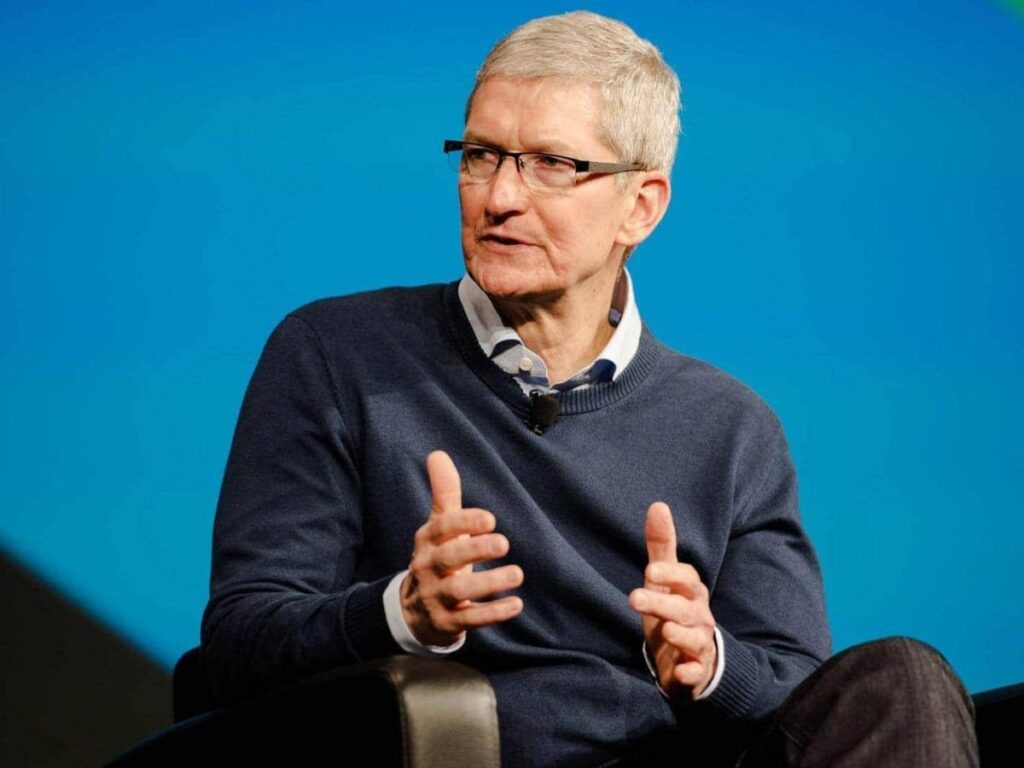
Apple has officially announced that Apple CEO Tim Cook will step down after nearly 15 years, marking a major leadership transition at Apple. The change, confirmed on April 20, 2026, will take effect on September 1, when John Ternus will take over as the new CEO, while Cook transitions to executive chairman.
Apple Confirms Leadership Transition
The company has confirmed that this transition is part of a long-term succession plan that has been in development internally for years. Cook will continue to serve as CEO through the coming months to ensure a smooth and controlled handover before officially stepping down.
Apple’s board has approved the transition, reinforcing confidence in the company’s leadership structure. The move has been executed with clear timing, ensuring continuity across operations and strategy.
Apple’s Next CEO John Ternus
John Ternus will become only the fourth CEO in Apple’s history, stepping into one of the most high-profile leadership roles in global business. A 25-year Apple veteran, he has played a key role in shaping the company’s core products, including the iPhone, Mac, and Apple’s transition to its own silicon chips.
In his message following the announcement, Ternus described the moment as a significant responsibility and expressed confidence in Apple’s direction. Cook also endorsed his successor, highlighting the preparation and trust behind the transition.
The Three Key Reasons
Tim Cook outlined three key factors that led to his decision, showing that the timing of the transition is based on alignment rather than urgency.
1. Strong Business Performance
Apple is currently operating from a position of strength. Under Cook’s leadership, the company has grown from a valuation of around $350 billion in 2011 to nearly $4 trillion, making it one of the most dominant companies in the global economy. Revenue growth, profitability, and global expansion have remained consistent over the years.
2. A Well-Established Product Pipeline
Another key factor is the strength of Apple’s future roadmap. The company already has a clearly defined pipeline of upcoming products, technologies, and ecosystem developments. This ensures that the leadership transition will not disrupt innovation or delay execution.
3. A Fully Prepared Successor
The readiness of John Ternus was the final factor. Cook confirmed that the transition has been planned internally for several years, with Ternus gradually taking on greater responsibilities across key projects. This preparation ensures that the leadership shift remains structured and predictable.
Tim Cook’s 15-Year Legacy
When Tim Cook became CEO in 2011 following Steve Jobs, there were widespread doubts about whether Apple could sustain its momentum. Over the next 15 years, he transformed the company into one of the most valuable and operationally efficient businesses in the world.
During his tenure, Apple expanded beyond the iPhone to build entirely new product categories such as Apple Watch and AirPods, both of which grew into massive global businesses. At the same time, the company strengthened its services ecosystem, including Apple Music, iCloud, and Apple TV+, creating strong recurring revenue streams.
Cook also played a critical role in scaling Apple’s global supply chain, expanding its presence across key international markets, and strengthening its overall ecosystem.
Conclusion
Tim Cook’s departure brings to a close a 15-year leadership era that transformed Apple into one of the most valuable and operationally strong companies in the world. The transition has been planned over time, with a clear structure in place and a successor ready to take over.
With John Ternus set to assume leadership later this year and Cook continuing as executive chairman, Apple has executed a leadership change designed to ensure continuity while maintaining its current direction.