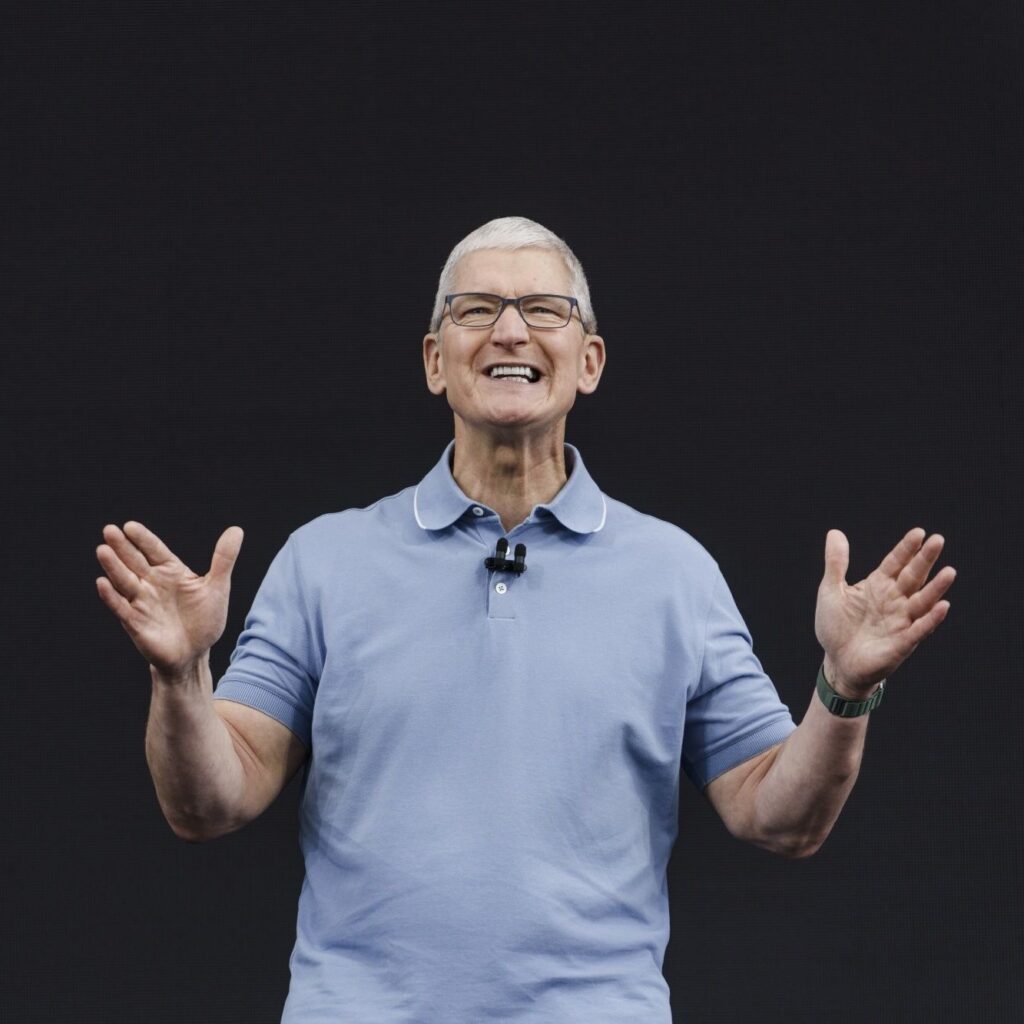
When Tim Cook became Apple’s CEO in 2011, the biggest concern was whether the company could survive without Steve Jobs. Fifteen years later, Apple stands as one of the world’s most valuable businesses, with a market value exceeding $3 trillion and an ecosystem that now includes more than 2 billion active devices. Few leaders have faced expectations as high as Cook did, and even fewer have delivered results on such a massive scale.
John Ternus steps into the CEO role at a moment when the conversation around Apple has changed. Questions about stability and growth have largely disappeared, while artificial intelligence, changing consumer expectations, and a rapidly evolving technology landscape have moved to the center of attention.
Tim Cook’s Legacy
Tim Cook’s impact on Apple goes far beyond product launches. He transformed the company into one of the most disciplined and profitable organizations in modern business, strengthening its global supply chain while expanding its reach across hardware, software, and services.
Apple’s services business became a major growth engine under his leadership, while products such as the iPhone, Mac, iPad, and Apple Watch evolved into an interconnected ecosystem that keeps customers deeply engaged. Consistent execution helped Apple maintain its position at the top of the industry while many competitors struggled to keep pace.
Strong financial performance, customer loyalty, and global scale are already part of Apple’s identity. Discussion around the company increasingly focuses on influence and whether it can continue shaping the direction of the industry as effectively as it once did.
Why Apple Chose John Ternus
Apple’s choice of successor offers insight into how the company views its next phase of growth. Rather than selecting another executive known primarily for operations or finance, the board placed its confidence in a leader whose career has been closely tied to product development and engineering.
John Ternus spent decades helping shape some of Apple’s most important hardware initiatives. His background reflects a deep understanding of how products are built, refined, and brought to market. That experience carries particular importance at a time when hardware, software, artificial intelligence, and silicon development are becoming increasingly interconnected.
Apple’s decision also reflects how the industry itself is changing. Hardware, software, silicon, and artificial intelligence are becoming increasingly intertwined, creating a business environment where engineering leadership carries greater strategic importance than it did a decade ago.
Choosing an engineering leader sends a clear message about where Apple sees future opportunities. Product experiences, hardware innovation, and deeper integration between devices and software appear set to play an increasingly important role in the company’s direction.
Apple’s AI Challenge
Artificial intelligence now sits at the center of almost every discussion about the future of technology. Companies that once competed primarily through devices and software are increasingly being judged by their AI capabilities and long-term strategies.
Apple’s latest announcements at WWDC 2026 highlighted a stronger focus on Siri and Apple Intelligence, signaling that AI is becoming a core part of the company’s ecosystem. The goal is not simply to add new features but to create experiences that feel more natural, useful, and deeply integrated into everyday tasks.
Apple’s position in the AI race looks noticeably different from many of its rivals. Privacy, on-device processing, and ecosystem integration remain central to its strategy, creating a path that differs from companies focused primarily on cloud-based AI services. That approach may not generate the loudest headlines, but it reflects a strategy centered on usability rather than spectacle. Apple has historically focused on making technology feel accessible to everyday users, and its AI ambitions appear to follow the same path.
Rethinking Apple’s Edge
Much of the debate surrounding Apple centers on whether the company remains as innovative as it once was. The discussion is understandable, especially when every new product is compared with the impact of the iPhone.
Consumer expectations have evolved significantly. New devices and breakthrough product categories once dominated conversations about innovation. Today, AI capabilities, software experiences, and intelligent ecosystems play a much larger role in shaping how technology companies are perceived.
Apple continues to invest heavily across hardware, software, and silicon development. The transition to Apple Silicon changed expectations throughout the personal computing industry, while the company’s ecosystem remains one of its strongest competitive advantages. Those achievements may not always attract the same attention as a major product launch, but they continue to influence the broader market.
Looking at innovation through a wider lens creates a different perspective. Influence is not always measured by a single breakthrough device. Sometimes it comes from shaping how technologies are adopted, integrated, and used at scale.
The Ternus Era Begins
Apple’s leadership transition carries significance beyond a change in title. One of the world’s most influential companies is entering a new phase while the broader technology industry is experiencing one of its most significant shifts in recent memory.
The company begins this chapter with enormous advantages. Its brand remains among the strongest in the world, its ecosystem reaches billions of users, and its engineering resources are difficult for competitors to match. Few organizations start a leadership transition from such a position of strength.
Expectations surrounding Apple remain unusually high because few companies have influenced consumer technology as consistently as Apple. People look to the company not only for products, but also for signals about where the broader market may be heading.
Conclusion
The transition from Tim Cook to John Ternus arrives during a period of significant change across the technology industry. Artificial intelligence is reshaping how products are built, how services are delivered, and how consumers interact with technology on a daily basis.
Apple enters this chapter with enormous advantages. Its ecosystem continues to expand, its brand remains one of the most recognized in the world, and its engineering resources are difficult for competitors to match. Those strengths provide a strong foundation, but they also create expectations that few companies ever face.
Apple’s reputation was built by turning complex technology into products that felt intuitive and useful for everyday consumers. Discussion surrounding the company is becoming less focused on what it has already achieved and more focused on how it responds to changing expectations across the industry. Artificial intelligence may be dominating today’s conversation, but Apple’s long-term influence will ultimately depend on how effectively it turns new technologies into meaningful everyday experiences.
Frequently Asked Questions
1. Who is John Ternus?
John Ternus is Apple’s incoming CEO and a longtime engineering leader who has played a key role in the development of several major Apple hardware products and technologies.
2. Why is John Ternus replacing Tim Cook as CEO?
Apple selected Ternus as part of its planned leadership transition, reflecting the company’s growing focus on product development, engineering, artificial intelligence, and next-generation technology experiences.
3. When will John Ternus officially become Apple’s CEO?
John Ternus is scheduled to become Apple’s CEO on September 1, 2026, while Tim Cook will transition to the role of Executive Chairman.
4. What are the biggest challenges facing Apple after Tim Cook?
Apple must navigate increasing competition in artificial intelligence, changing consumer expectations, and the pressure to maintain its influence in an industry evolving at an unprecedented pace.
5. How important is artificial intelligence to Apple’s future?
Artificial intelligence is becoming a core part of Apple’s long-term strategy, with the company integrating AI capabilities across Siri, Apple Intelligence, and its broader ecosystem of devices and services.