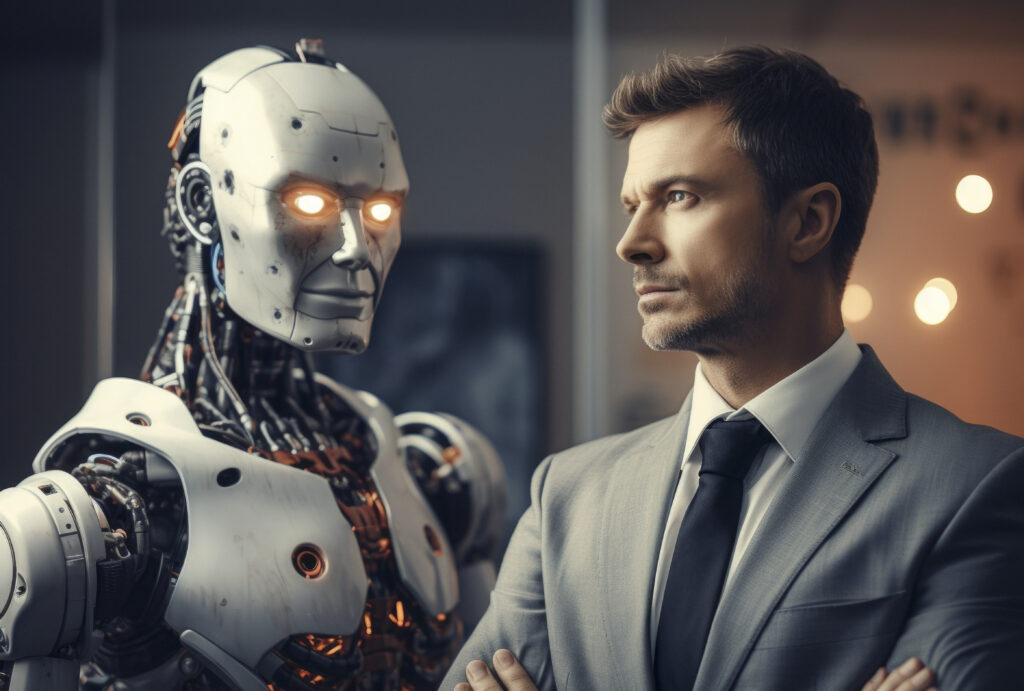

At first, many employees believed AI would simply become another workplace tool, something that could help with emails, reports, or repetitive tasks. In 2026, that conversation looks very different. Workplaces are changing faster than most employees expected. Software can now analyze performance, predict customer behavior, automate repetitive work, and help companies make decisions in minutes instead of days. Many organizations are becoming smaller, leaner, and more dependent on technology with every passing month.
Many people are starting to wonder what still makes them valuable when machines can do more every month. They are worried about shrinking teams, constant monitoring, job security, and whether companies still see them as people or simply as costs. That is why the future of leadership in the AI era matters more now than it did before the AI boom began.
Technology may be changing how work gets done, but leadership still decides how people feel while doing it. In a workplace increasingly shaped by algorithms, the leaders who stand out will not be the ones who know the most about AI. They will be the ones who know how to make people feel confident, trusted, and important during change.
The Leadership Value of Clarity
Leaders were once expected to be the smartest people in the room. They needed to know the numbers, understand the market, and make decisions faster than everyone else. But AI is changing that model because information is no longer rare. Almost every company now has access to dashboards, forecasts, analytics, and AI-generated recommendations. The challenge is no longer finding information. The challenge is understanding which information actually matters.
Many businesses now suffer from what could be called “information fatigue.” Teams are flooded with dashboards, AI reports, Slack messages, meeting summaries, and performance metrics. But more information does not automatically create better decisions. In fact, too much information often creates confusion. Companies are not suffering from a lack of data anymore. They are suffering from a lack of clarity.
Great leaders still have an advantage because they create direction in a world overloaded with information. They help employees understand what matters, what should be ignored, and where the company is going next. Leadership in the age of AI is moving away from being the person with the most answers and becoming the person who can explain which answers deserve action.
The Limits of AI Decision-Making
AI is very good at predicting outcomes, spotting patterns, and recommending the fastest route forward. But leadership is rarely about choosing the fastest answer. Leadership is about deciding what is fair, what is ethical, what is worth risking, and when not to follow the numbers blindly.
Human judgment is becoming more valuable than technical knowledge. In the future, leaders will not be respected because they know more than AI. They will be respected because they know when not to listen to it.
One of the biggest mistakes companies are making right now is assuming that if something can be automated, it should be automated. That mindset may improve short-term efficiency, but it can damage long-term trust. A workplace where every movement is tracked, every conversation is analyzed, and every employee feels replaceable may become more productive for a while. But eventually, people stop feeling loyal to the company. They stop taking risks, stop sharing ideas, and stop caring beyond the minimum.
Companies like IBM have already slowed hiring in some back-office roles that AI can increasingly handle. Klarna and Shopify have also become symbols of AI-driven efficiency, but they have raised a much bigger question for employees: if technology keeps replacing tasks, what still makes people valuable inside a company? The companies that win in the long run will not be the ones that automate everything. They will be the ones that know where automation should stop.
The Power of Trust
Employees today are more anxious than they were a few years ago. Many are worried about layoffs, restructuring, changing job roles, and whether AI will make their skills less valuable. A recent Gallup study found that nearly one in five employees believe their jobs could disappear within the next five years because of automation.
Employees are not only looking for leaders who can improve performance. They are looking for leaders who can reduce uncertainty.
Trust is becoming one of the most valuable business assets because employees adapt faster when they trust leadership. They stay longer when they trust leadership. They are more open to change when they trust leadership. In a workplace filled with uncertainty, trust becomes the thing that keeps people engaged.
A lot of companies still misunderstand how trust is built. They assume trust comes from being confident, having all the answers, and always looking in control. But in reality, employees often trust leaders more when they are honest enough to admit uncertainty. A leader who says, “We do not have every answer yet, but this is the direction we are moving in,” often builds more trust than someone pretending everything is perfect.
The strongest leaders are not always the loudest people in the room. They are the people who can make employees feel calmer, clearer, and more secure during difficult times. AI creates productivity. Leaders create belief. The real risk is not AI replacing people. It is leaders starting to treat people like software.
Coaching Leadership
Traditional leadership was often built around control. Managers were expected to monitor work, track performance, approve every decision, and supervise every step of the process. But AI can now do much of that faster than people can. It can monitor deadlines, summarize meetings, track productivity, and recommend next steps.
Leadership is now moving in a different direction. Instead of controlling people, managers increasingly need to coach them.
The leaders who stand out today are the ones who can build confidence, guide employees through uncertainty, encourage learning, and help teams adapt to change. Emotional intelligence is becoming more important because employees want managers who can listen, explain, and respond calmly under pressure.
Leadership is going through a major shift. In the past, managers were promoted because they could control work. In the future, leaders will be promoted because they can unlock people.
Companies spent decades training leaders to behave like machines. They were told to focus on productivity, performance, speed, and output. Now that machines are finally here, leadership is becoming human again.
Conclusion
AI will continue to become smarter, faster, and more powerful. It will take over more repetitive work, reduce manual effort, and reshape how companies operate. But leadership will become more valuable, not less.
Machines can process information faster than people ever will. They can analyze patterns, generate recommendations, and improve efficiency. But they cannot calm fear during uncertainty, rebuild trust after difficult decisions, or make people feel seen when work becomes overwhelming.
The leaders who succeed in the future will not be the ones trying to compete with AI. They will be the ones who know how to use it without losing the human side of leadership. In the end, companies may invest in the same AI tools, use the same software, and follow the same data. But they will never all have the same leaders. And that may become the biggest competitive advantage of all.
Frequently Asked Questions
1. Can AI replace leaders completely?
No. AI can improve productivity, automate tasks, and support decisions, but it cannot replace trust, emotional intelligence, judgment, or the ability to inspire people during uncertainty.
2. What leadership skills are becoming more important in the AI era?
Skills like communication, emotional intelligence, coaching, trust-building, adaptability, and ethical decision-making are becoming more valuable as AI takes over repetitive work.
3. Why are employees becoming more anxious about AI?
Many employees worry that automation could reduce jobs, increase monitoring, or make their skills less valuable. That is why leaders need to create more clarity and trust.
4. How can leaders use AI without losing the human side of leadership?
Leaders should use AI for efficiency, data, and automation, but keep people-focused decisions around trust, feedback, culture, and communication human.
5. Why is trust becoming more important in workplaces?
Employees adapt faster, stay longer, and perform better when they trust leadership. In a workplace filled with change and uncertainty, trust has become a major business advantage.