Donald Trump has opened a new front in the global trade battle, this time targeting the pharmaceutical industry.
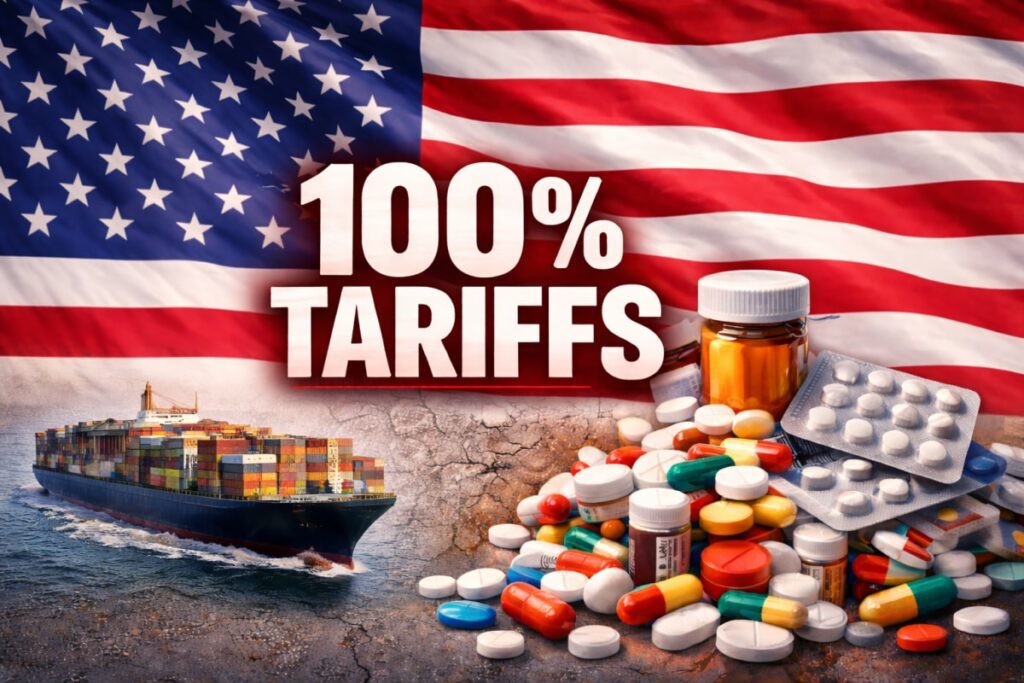
On April 2, the Trump administration announced a new tariff policy that could place duties of up to 100% on imported patented and branded medicines sold in the United States. The move is designed to pressure pharmaceutical companies to cut drug prices for American consumers and expand manufacturing inside the country.
Large pharmaceutical firms have been given 120 days to respond, while smaller companies have 180 days before the tariff system starts taking effect.
Why Trump Is Targeting the Pharma Industry
The White House believes the U.S. depends too heavily on foreign-made medicines and pharmaceutical ingredients. Officials argue that too much production is concentrated in countries like China, India, and parts of Europe, creating a risk if supply chains are disrupted by future pandemics, wars, or trade conflicts.
Trump is also using the tariff threat to push drugmakers into reducing prices. Prescription medicines in the U.S. are often far more expensive than in Europe, Canada, and other developed markets. The administration wants companies to either lower prices or bring more production to America.
The policy is also part of Trump’s wider effort to bring manufacturing jobs back to the U.S., especially in industries considered important for national security.
Which Drug Companies Could Face the Most Pressure
The companies most exposed are global drugmakers that manufacture expensive branded medicines outside the U.S. That includes cancer drugs, rare disease treatments, biologics, autoimmune therapies, and other high-margin patented products.
Companies that do not make any commitments could face the full 100% tariff. Others may receive lower rates if they agree to build U.S. factories or sign pricing deals with the government.
Some of the biggest pharmaceutical names are already moving quickly. Pfizer, Eli Lilly, Merck, AstraZeneca, Johnson & Johnson, and Novo Nordisk have all been linked to new U.S. investment plans, factory expansions, or pricing negotiations in recent months.
The pressure is especially high for smaller biotech firms. Unlike major pharma giants, they often do not have the financial strength to quickly build factories in America or absorb major cost increases.
Why India Is Watching the Situation Closely
India is not expected to face the worst immediate impact because generic medicines are currently exempt from the new tariff rules. That matters because generic drugs account for most of India’s pharmaceutical exports to the U.S. and make up the majority of prescriptions filled in the American market.
Still, Indian drugmakers are not fully safe. The White House has already said it may review generic medicines, biosimilars, and pharmaceutical ingredients again within the next year. If that happens, Indian companies could face a much bigger challenge.
Drugmakers such as Sun Pharma, Dr. Reddy’s, Lupin, Cipla, and Biocon are likely to watch closely because many of them supply ingredients, contract manufacturing services, or specialty medicines to global pharmaceutical companies.
Why This Could Change the Industry
The biggest impact may not be the tariff itself. It may be the pressure it creates on where medicines are made in the future. For years, many drug companies built global supply chains around lower-cost manufacturing hubs in India, China, Singapore, and Europe.
Trump’s new policy could force them to rethink those networks and move more production closer to the U.S. That change will not happen overnight because building a new pharmaceutical plant can take years and cost billions of dollars. Companies may also need to rethink hiring, logistics, ingredient sourcing, and partnerships with suppliers.
The new tariff plan could increase manufacturing costs, slow down some supply chains, and create delays for companies that depend heavily on overseas production. Businesses that already have factories in the U.S. or strong local partnerships may be in a better position than companies that still rely heavily on imported patented medicines.
Trump’s move is quickly becoming more than just a tariff decision. It is putting pressure on global pharmaceutical companies to rethink their long-term manufacturing strategy, supply chain model, and future investment plans.