

For years, leadership was measured by momentum. Expansion signaled confidence. Speed
suggested relevance. Leaders were expected to act quickly, speak frequently, and keep
organizations in constant motion. That instinct worked when uncertainty came in waves.
In 2026, uncertainty no longer arrives in waves. It surrounds everything. Economic signals
contradict each other. Technology evolves faster than trust can follow. Political and regulatory
shifts appear without warning. In this environment, leaders are discovering an uncomfortable
truth. Acting fast no longer guarantees progress. Sometimes, it quietly increases risk.
Strategic restraint is emerging from this realization. Not as hesitation. Not as fear. But as a
disciplined leadership response to a world where the cost of a wrong move has multiplied.
The Speed Trap

Speed once protected leaders from irrelevance. Today, it often exposes them to fragility.
Organizations that moved aggressively during earlier waves of transformation are now dealing
with the consequences of rushed decisions. Systems that do not integrate. Teams that feel
exhausted. Strategies that require constant correction.
This is not a failure of ambition. It is a failure of pacing. When leaders respond to every signal,
they create instability inside their own organizations. Direction blurs. Priorities shift. Teams stop
trusting long term plans because they expect them to change again.
Strategic restraint interrupts this pattern. It challenges the assumption that motion equals
leadership. It forces leaders to ask a quieter question. Is this move necessary, or is it simply
visible?
Rising Decision Costs
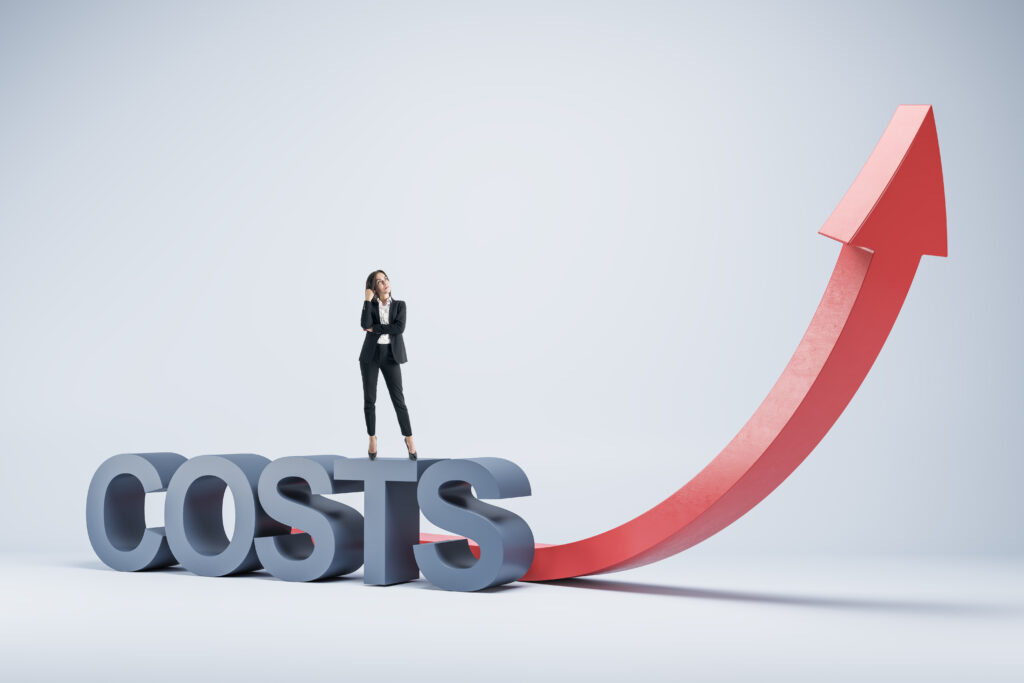
What has changed most is not the number of decisions leaders make. It is the cost attached to
them. Policy shifts, supply chain dependencies, and reputational risk now move faster than
internal correction cycles. A decision made under pressure can lock an organization into
consequences that are difficult to unwind.
Restraint acknowledges this reality. It does not delay action indefinitely. It delays commitment
until exposure is understood. Leaders practicing restraint design decisions to remain reversible
where possible. They avoid stacking multiple irreversible bets at the same time.
This approach protects flexibility. In unstable environments, flexibility is not a luxury. It is
survival.
Cognitive Overload

There is another pressure shaping leadership behavior in 2026. Cognitive overload. Leaders
receive more information than ever before, yet clarity is harder to achieve. Automated reports,
dashboards, alerts, and real time metrics demand constant interpretation.
Strategic restraint acts as a filter. By choosing fewer priorities, leaders reduce noise across the
organization. Teams spend less energy reacting and more energy executing. Focus becomes an
operational advantage.
Restraint is not about shrinking ambition. It is about protecting attention. And attention,
increasingly, is the scarcest resource in leadership.
Trust Preservation

Trust is fragile in unstable environments. Employees watch how leaders respond to pressure.
Customers notice whether organizations act responsibly or impulsively. Boards assess not just
outcomes, but judgment.
Leaders who practice restraint signal reliability. They communicate less frequently, but more
clearly. They resist dramatic gestures in moments of uncertainty. Over time, this consistency
builds confidence.
Strategic restraint also preserves human trust during technological change. Organizations that
rushed automation without considering human impact are now rebuilding credibility. Leaders
who slowed adoption, tested carefully, and communicated transparently are retaining trust as
conditions evolve.
Deliberate Structure

Restraint is most effective when it is structured. Calm leaders do not rely on willpower alone.
They embed discipline into decision processes. Large commitments face cooling periods.
Expansion is limited to one dimension at a time. Internal challenge mechanisms are encouraged,
not silenced.
These structures do not slow organizations down. They prevent unnecessary reversals. Over
time, they create momentum that holds.
Conclusion

Strategic restraint is becoming a core leadership advantage because it aligns with the reality
leaders now face. Volatility has raised the price of mistakes. Constant change has exhausted
organizations. Trust has become harder to earn and easier to lose.
The leaders who thrive in this environment are not retreating from growth. They are refining
their approach. They move with intention, protect reversibility, and refuse to confuse urgency
with importance.
In a world that rewards noise, restraint looks quiet. In practice, it is one of the strongest signals
of leadership maturity.