
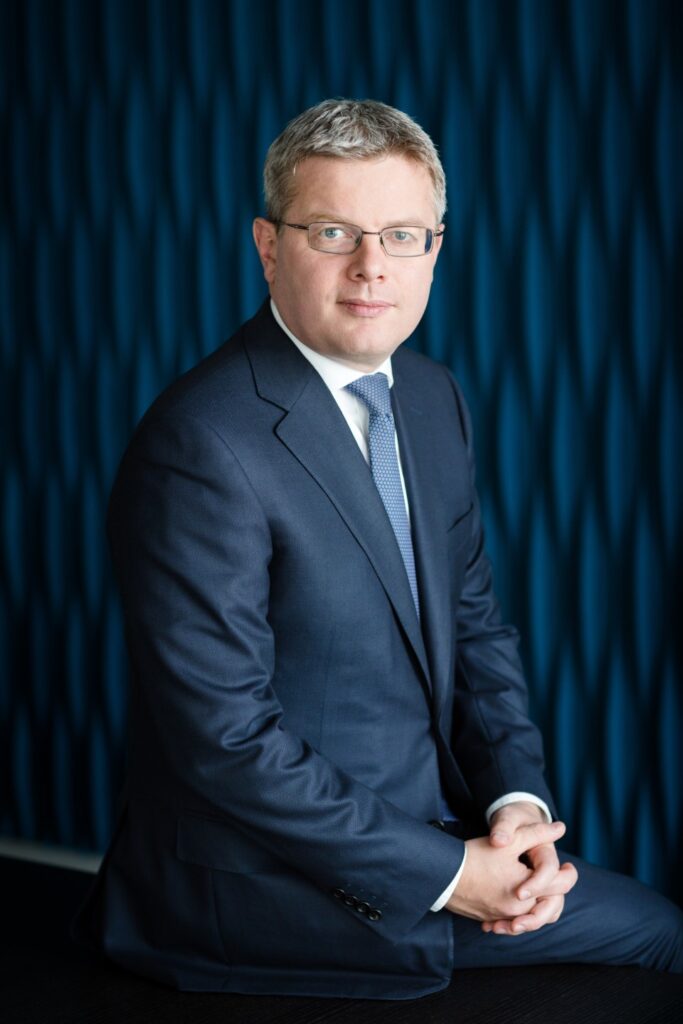
Deutsche Bank is placing authority over its most profitable businesses under a tighter leadership structure. Fabrizio Campelli will take on the role of President from July 1, 2026, while continuing to oversee the Corporate Bank, the Investment Bank, and key international markets including the Americas, the United Kingdom, and Ireland.
This combination places a significant portion of the bank’s revenue-generating operations under one executive. The businesses led by Campelli are central to Deutsche Bank’s income, spanning corporate lending, fixed income trading, and large-scale client advisory.
The change follows the planned departure of Chief Financial Officer James von Moltke in June, marking a transition that reshapes how operational and financial leadership intersect within the bank.
A Leadership Core Built Around Execution
Campelli’s expanded role sits at the center of a broader set of leadership adjustments. Deutsche Bank has moved to strengthen its senior bench by bringing in executives whose responsibilities connect directly to business performance.
Stefan Hoops, Chief Executive of asset manager DWS, will join the Management Board from May 2026 while continuing in his current role. His appointment brings asset management closer to the bank’s main operating structure, reflecting its growing contribution to revenue and client relationships.
Marie-Jeanne Deverdun will step in as Chief Technology, Data and Innovation Officer. Having previously served as Chief Operating Officer for the Corporate and Investment Bank, she brings direct operational experience into a role that now sits alongside core business leadership.
Together, these changes bring lending, trading, asset management, and technology into a more integrated leadership framework.
Succession Planning Moves Into View
The reshaped structure also highlights how Deutsche Bank is preparing its next generation of leadership. Campelli and Hoops are now positioned among the most influential executives within the organization, with responsibilities that extend across multiple business lines.
Both have built their careers within the bank. Campelli joined in 2004 and has held roles across transformation, wealth management, and corporate banking. Hoops has led DWS through a period of recovery and performance improvement, restoring confidence in the asset management business.
Their elevation reflects a preference for continuity at a time when global banks are navigating regulatory pressure, shifting capital markets, and increasing competition from U.S. firms.
Technology and Security Move Closer to Decision-Making
The addition of a dedicated technology and innovation role at board level signals how central digital infrastructure has become to banking performance. Data systems, automation, and client-facing platforms are no longer support functions. They now sit alongside revenue-driving businesses in shaping outcomes.
Security has also moved higher within the leadership structure. Brent Phillips, Group Chief Security Officer, has been elevated to the Group Management Committee. His role spans cyber defense and physical security, both of which have become more complex as financial institutions expand their digital operations.
Across the industry, banks are investing heavily in technology to improve efficiency and manage risk. Deutsche Bank’s latest changes reflect that shift at leadership level.
Performance Momentum and Strategic Direction
The leadership restructuring comes at a time when Deutsche Bank is reporting stronger financial results. The bank generated more than €32 billion in revenue in 2025, supported by growth in fixed income trading and corporate banking activity.
Campelli’s divisions have been central to that performance. His leadership of the investment bank has coincided with strong trading results, while the corporate bank has benefited from higher demand for financing and transaction services.
The bank’s “Global Hausbank” strategy focuses on serving large corporate clients across regions and products. By combining regional oversight with control over key business units, the new structure aims to simplify execution and improve coordination.
Large corporate clients working across lending, trading, and advisory may now experience faster decision-making under a more centralized leadership setup, particularly in transactions that require coordination across multiple divisions.
Conclusion
Deutsche Bank’s latest leadership changes reflect a shift in how authority is organized rather than a routine reshuffle of titles. Revenue, client relationships, and regional operations are being brought closer together under a smaller group of senior executives.
This approach creates a more direct line between strategy and execution. It allows the bank to respond more quickly in competitive situations where speed and coordination can determine outcomes.
At the same time, concentrating responsibility within a narrower leadership group increases reliance on individual performance. The success of this structure will depend on how effectively these leaders translate control into sustained growth.
In a global banking environment where scale and responsiveness increasingly define competitiveness, Deutsche Bank is adjusting where decisions are made and how quickly they can be executed.