
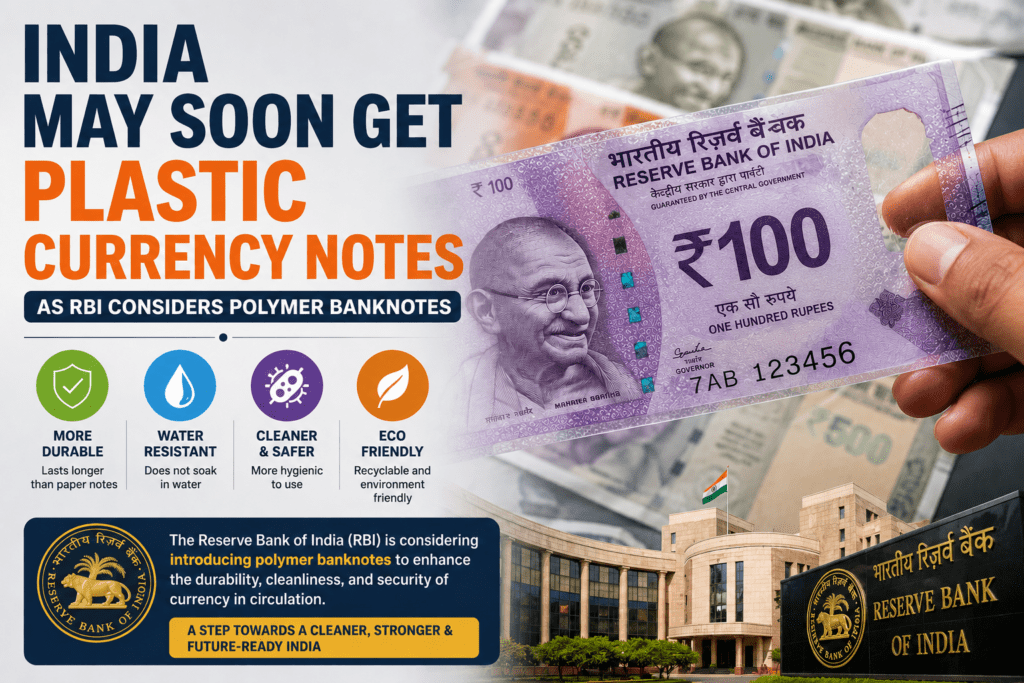
The Reserve Bank of India (RBI) has confirmed that it is examining a plan to introduce polymer currency, bringing fresh attention to a proposal that could reshape the way physical cash is managed in the country. The development comes as the cost of printing banknotes continues to rise and the volume of cash circulating across the economy remains at record levels despite the rapid growth of digital payments.
Speaking after the Monetary Policy Committee (MPC) meeting on June 5, RBI Governor Sanjay Malhotra said the idea of introducing polymer, or plastic, currency notes is currently being examined by the central bank. He clarified that discussions are still at a preliminary stage and no decision has been taken on introducing the new material into circulation.
RBI Revisits Plastic Currency
The governor’s remarks are the strongest official indication yet that the RBI is once again evaluating the possibility of plastic currency notes.
Although reports about polymer currency have surfaced periodically over the years, the latest confirmation places the idea back on the policy agenda. The RBI has not announced any rollout schedule, pilot programme, or denomination changes, but the statement signals that policymakers are actively assessing whether a shift away from traditional paper notes would make economic and operational sense.
Currency Costs Surge
A key reason behind the renewed discussion is the growing cost of maintaining India’s cash network.
According to RBI data, expenditure on printing banknotes climbed to ₹6,372.8 crore in FY2024-25, compared with ₹5,101.4 crore in the previous financial year. During the same period, nearly 23.8 billion damaged and soiled notes were removed from circulation and replaced with fresh currency.
The figures highlight the scale of the challenge facing the central bank. As more notes wear out and require replacement, the cost of maintaining the country’s currency supply continues to increase.
Cash Defies Digital Growth
The review also comes at a time when cash usage remains resilient despite India’s rapid shift toward digital transactions.
Recent RBI figures show that currency in circulation has crossed ₹42 lakh crore, reflecting continued demand for physical cash across businesses, households, and everyday transactions. While platforms such as UPI have transformed payments, the latest numbers suggest that digital growth has not reduced the importance of cash in the broader economy.
The combination of rising cash circulation and higher printing expenses has strengthened the case for exploring alternatives that can remain in use for longer periods.
Benefits of Polymer Currency
Unlike conventional paper currency, polymer notes are produced using a durable plastic-based material designed to withstand heavy handling.
The main attraction is longevity. Plastic notes generally remain in circulation much longer than traditional paper notes and are more resistant to moisture, dirt, and tearing. Because they need to be replaced less frequently, they have the potential to reduce long-term printing and replacement costs.
Polymer currency can also accommodate additional security features, making it harder to counterfeit and easier to authenticate.
For now, paper currency remains unchanged and the RBI has not announced any timeline for further action. However, the central bank’s latest confirmation has revived a policy discussion that could influence the future of physical cash in India as authorities look for ways to manage rising costs while maintaining a secure and efficient currency system.