
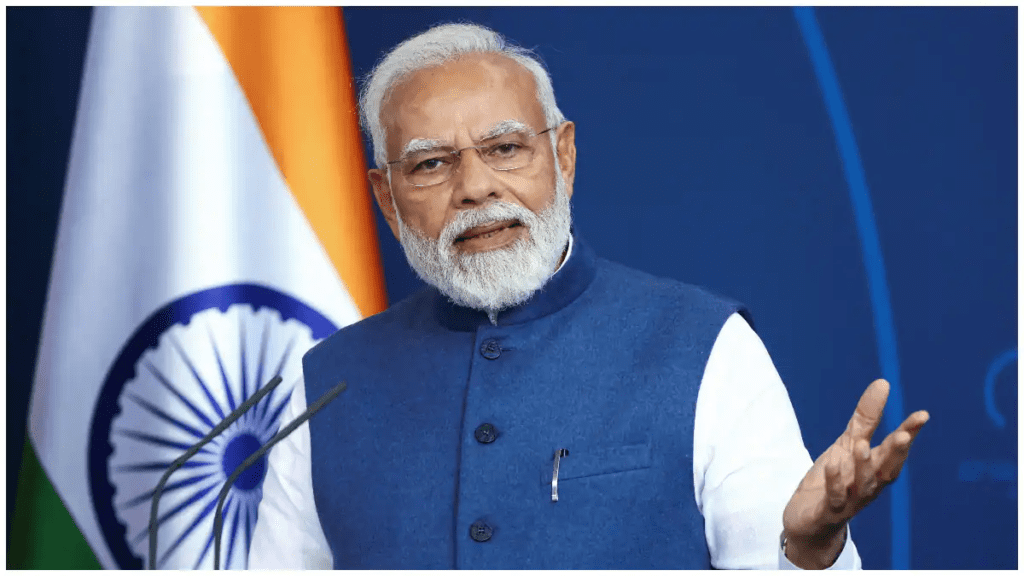
India’s work from home debate has returned to the center of Corporate India after Prime Minister Narendra Modi urged businesses and citizens to revive Covid-era practices like remote work, virtual meetings, and reduced travel to conserve fuel amid rising pressure from the ongoing West Asia crisis. The appeal has quickly triggered discussions across IT companies, consulting firms, employee unions, and business leaders as rising oil prices and supply concerns begin affecting India’s economic outlook.
India imports nearly 85% of its crude oil, while a major portion of those supplies passes through the Strait of Hormuz, one of the world’s most important oil transit routes. Continued geopolitical tensions in West Asia have increased concerns around energy security, import costs, and pressure on India’s foreign exchange reserves. During recent public addresses, PM Modi asked citizens to reduce unnecessary travel, use public transport wherever possible, and restart online systems that became common during the pandemic years.
PM Modi’s comments have brought back a workplace debate that many companies thought was already over after pushing employees back to offices over the last two years.
Hybrid Work Debate Returns
Following the Prime Minister’s remarks, companies across India’s technology, consulting, finance, and services sectors have reportedly started reviewing hybrid work flexibility and reducing non-essential travel. Executives from multiple firms confirmed they are reassessing backup plans if fuel volatility and global supply pressure continue rising in the coming weeks.
Many organizations are discussing temporary hybrid schedules, staggered office attendance, and expanded virtual collaboration instead of fully returning to pandemic-style remote work. The renewed discussion is especially strong in Bengaluru, Hyderabad, Pune, and Gurugram, where employees often spend several hours commuting daily through severe traffic congestion.
Daily travel expenses, long office commutes, and worsening traffic across major cities are once again making companies reconsider how much physical office attendance is actually needed. What was earlier seen mostly as a flexibility issue is now becoming a practical discussion around time, costs, and workplace efficiency.
IT Sector Wants Remote Work
One of the biggest developments after PM Modi’s appeal came from the Nascent Information Technology Employees Senate (NITES), which formally urged the Ministry of Labour and Employment to issue an official advisory supporting work from home wherever operationally feasible for India’s IT and ITES sectors.
The organization argued that India’s technology workforce had already demonstrated during the pandemic that large-scale remote operations are possible without major disruption. According to industry estimates, India’s IT sector currently employs nearly 5.8 million professionals, making it one of the country’s largest white-collar workforces.
Employee groups say wider hybrid work could help reduce fuel consumption, lower commuting stress, ease urban congestion, and help companies continue operations smoothly during periods of economic pressure.
Social media conversations around the issue have also intensified, with many professionals openly questioning whether strict office attendance still makes practical sense in India’s largest technology hubs.
Companies Can Still Reject WFH
Despite growing public support for remote work flexibility, labour law experts have clarified that Indian employees still do not have a universal legal right to work from home. Office attendance policies continue to remain largely controlled by employment contracts, HR policies, and company management decisions.
In simple terms, companies can still ask employees to work from offices because PM Modi’s statement is currently being treated as an advisory, not an official rule that businesses are legally required to follow.
Experts say PM Modi’s comments currently function as an economic and policy appeal rather than a legally binding national order. However, the statement has increased pressure on organizations that strongly enforced return-to-office mandates after the pandemic.
Several companies also remain cautious because businesses invested heavily in office infrastructure and workplace expansion during the post-pandemic recovery period. Many executives still believe physical collaboration and faster decision-making are easier to manage inside offices than through fully remote systems.
Companies Rethink Workplace Policies
A growing number of companies are now looking at remote work differently again because rising fuel costs, traffic pressure, and global uncertainty are starting to affect everyday business operations.
Unlike the Covid years, India’s latest work-from-home discussion is now being driven by fuel security, economic uncertainty, and geopolitical instability rather than public health restrictions. The conversation has moved beyond employee preference and office culture into a broader discussion about how businesses should operate during periods of rising energy costs and global instability.
Companies wanting employees back in offices and workers asking for more flexibility are once again on opposite sides of the debate. This time, however, businesses are being forced to rethink workplace policies as rising fuel costs, traffic problems, and global uncertainty continue putting pressure on daily operations.