
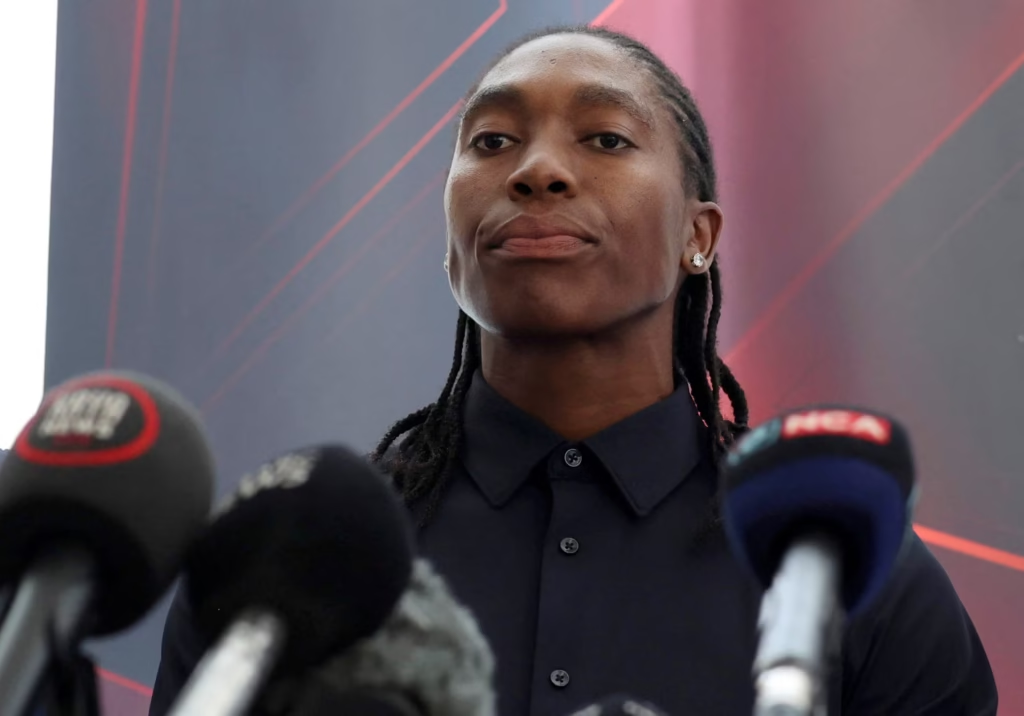
The global sports world is heading toward one of its biggest controversies before the Los Angeles 2028 Olympics. Double Olympic champion Caster Semenya is preparing to fight against the International Olympic Committee’s new gender eligibility policy, which will require female athletes to undergo a one-time SRY gene screening test before competing in women’s Olympic events.
The new rule was officially introduced by the IOC on March 26 and is already dividing athletes, governments, sports leaders, and scientists around the world. Under the policy, only athletes classified as biological females through SRY gene testing will be allowed to compete in women’s categories at the Olympics, Youth Olympics, and qualification events.
The test can be conducted through saliva, blood samples, or cheek swabs and is expected to become a permanent requirement for elite female athletes. Athletes who test positive for the SRY gene may still be allowed to compete in male, mixed, or open categories.
The IOC believes the rule is necessary because even the smallest biological differences can change medal results at the Olympic level. IOC President Kirsty Coventry argued that even the smallest biological advantages can decide Olympic medals and records.
Caster Semenya Rejects the Policy
The decision directly affects transgender athletes and women with Differences in Sex Development, including athletes like Caster Semenya, who has spent years challenging similar testosterone-based rules in athletics.
Semenya, however, has rejected the policy completely. Speaking this week, she said athletes would “make noise until we’re heard” and argued that the rule undermines women’s rights and dignity.
She rejected the claim that women with XY-DSD automatically have an unfair advantage, arguing that success in sport comes from years of training, discipline, and hard work. Semenya believes the policy is based more on fear and politics than real science.
The South African athlete has especially criticized the IOC consultation process, saying affected athletes were invited into discussions only so the organization could appear inclusive rather than genuinely listen to them.
Kirsty Coventry Faces Her First Major Leadership Test
Semenya has openly expressed disappointment in Kirsty Coventry, the first woman and first African president of the IOC. She said she expected more understanding from a leader who also comes from the Global South.
Semenya called the testing requirement “a disrespect for women” and questioned why female athletes should have to prove that they are women in order to compete.
This is not Semenya’s first battle with sports authorities. She has been at the center of gender eligibility debates since 2009 and was effectively blocked from competing in her best events after World Athletics introduced testosterone-lowering requirements for athletes with DSD conditions.
In 2025, she won a major human rights victory when the European Court of Human Rights ruled that Switzerland had failed to give her a fair hearing during her appeal against World Athletics rules. However, that ruling did not remove the regulations themselves.
The Debate Is Now Bigger Than Sport
The IOC’s new rules could trigger an even larger legal fight because they go beyond athletics and affect every Olympic sport. Critics say the IOC is trying to reduce a complex biological issue into one gene test, even though human biology is far more complicated.
Andrew Sinclair, the scientist who discovered the SRY gene, has already warned that the test should not be used as a single measure to determine whether someone is biologically female. He described the IOC’s approach as overly simplistic and potentially misleading.
France has also called the IOC’s policy a “step backwards” and warned that it could violate privacy, dignity, and anti-discrimination principles. More than 100 human rights organizations have reportedly opposed the move, arguing that mandatory testing could stigmatize women whose bodies do not fit narrow biological expectations.
What started as a sports policy is now turning into a global fight over identity, fairness, women’s rights, and the future of elite sport. Now, one of the biggest questions is whether the IOC will stand by the policy if Semenya and other athletes launch a legal challenge before Los Angeles 2028.